 Nikke Rose
Signal-Driven GTM: When Everyone Has Signals, Context Differentiates
 Nikke Rose: 25 Aug 2026
LinkedIn just gave GTM teams a signal of its own.




Build the foundation AI GTM needs to produce measurable revenue outcomes.
→ Start with your greatest confidence gap, then follow the right path from clarity to measurable activation and scale.
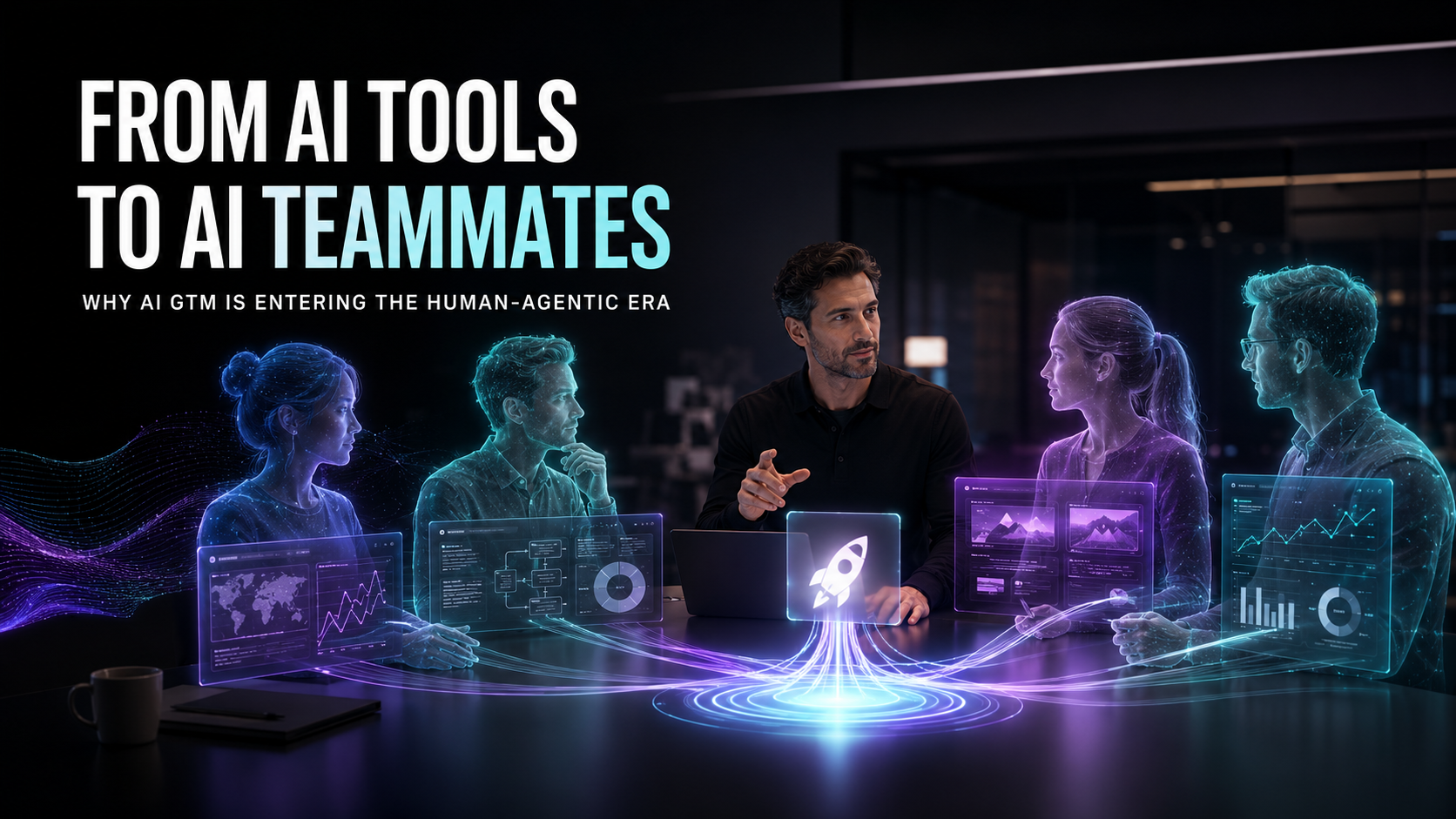
The next Revenue AI advantage will come from designing the right team – not choosing one “best” model.
OpenAI’s July 2026 introduction of ChatGPT Work sparked the predictable round of comparisons: Is GPT‑5.6 now better than Claude? Which model reasons more deeply? Which platform should teams standardize on?
Those questions still matter. They are simply no longer the biggest question.
Earlier in 2026, Anthropic introduced – and has since continued expanding – Claude Cowork, an agentic workspace built around delegated outcomes, multi-step work, parallel execution, and human review. Different companies. Different products. A remarkably similar direction.
Both are telling us that AI is moving beyond answering prompts. It is beginning to take on meaningful, multi-step work.
That changes the AI GTM conversation.
The question is no longer just:
Which AI is best?
The more strategic question is:
Which teammate should own this part of the work?
That is the shift from AI tools to AI teammates—and it is why AI GTM is entering the human-agentic era.
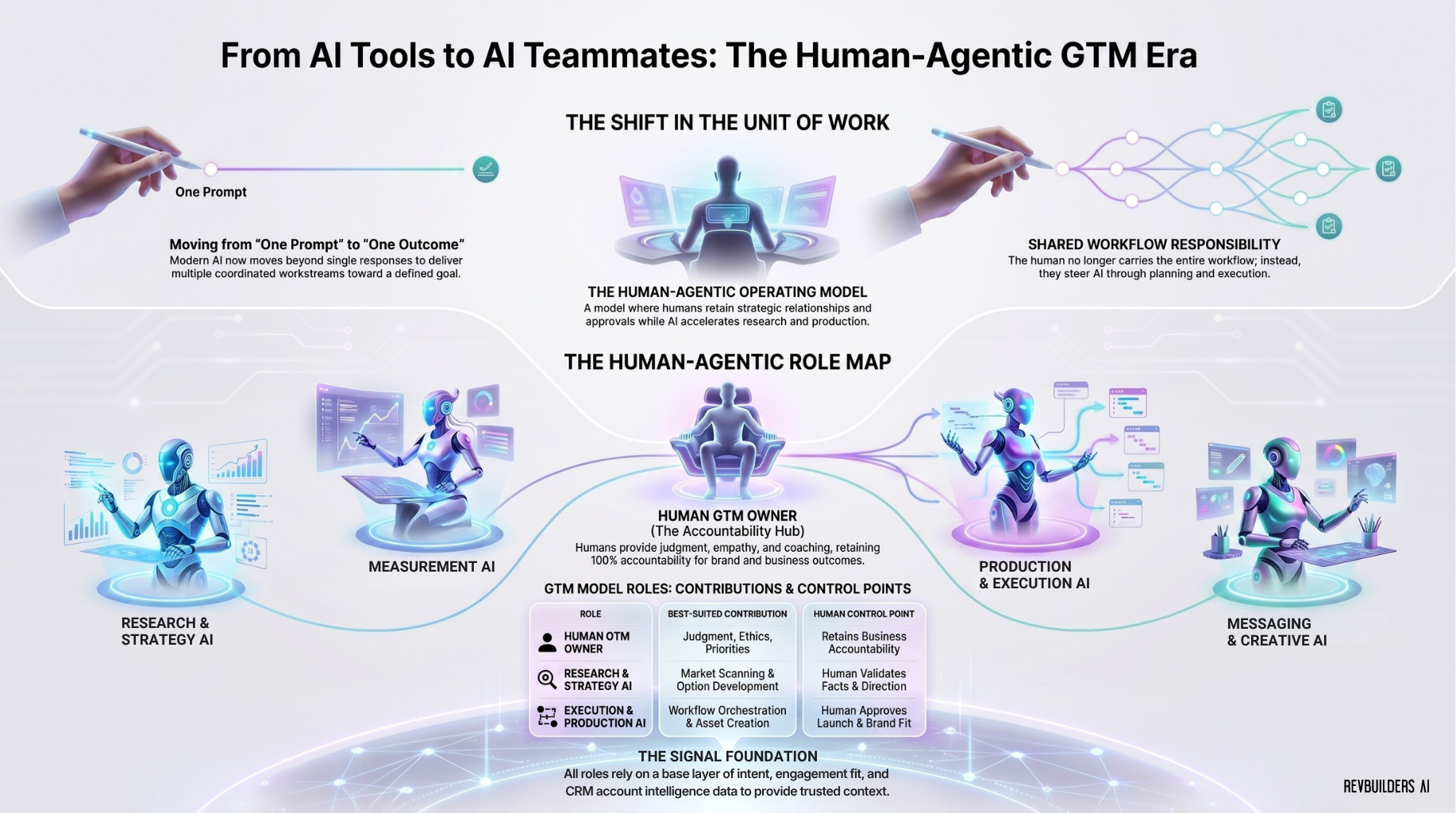
The short definition: Human-agentic GTM is a revenue operating model in which humans retain strategic judgment, relationships, approvals, and accountability while AI teammates accelerate bounded work across research, synthesis, orchestration, production, and analysis. The broader Human-Agentic GTM Operating Model connects those roles with signals, workflows, systems, governance, and measurement so the entire revenue engine can move as one.
For the past several years, most companies have approached generative AI the way they approached any other software category.
They compared features. Benchmarks. Context windows. Integrations. Price. Speed. Security. Output quality.
Then they licensed a platform and told employees to use it.
That made sense when the dominant unit of value was a prompt and a response. A person had a task. The AI helped with one piece of it. The person moved the work forward.
But agentic work changes the relationship.
When an AI system can gather context, plan an approach, work across files and connected tools, create multiple deliverables, accept redirection, and continue toward a defined completion bar, the system is doing more than assisting with a task. It is participating in the workflow.
OpenAI describes ChatGPT Work as gathering context, planning an approach, taking action across tools and files, and creating finished documents, spreadsheets, and presentations while the user remains in control. Its release notes emphasize that people can follow progress, answer questions, change direction, and approve important actions as the work unfolds.
Anthropic frames Cowork in similarly outcome-oriented terms: give Claude the result you need, let it split larger projects into parallel workstreams, and return to polished work for review.
The real signal is not that the products are identical. They are not.
The signal is that the market is converging on a new operating pattern:
Define the outcome. Provide the context. Set the boundaries. Let AI perform the work. Keep humans at the right control points.
That is a workforce design question, not merely a software-selection question.
The most important change is easy to miss because it sits underneath the product announcements.
The unit of work has changed.
|
Earlier AI adoption |
Emerging human-agentic work |
|
One prompt |
One outcome |
|
One response |
Multiple coordinated deliverables |
|
One user directs each step |
AI plans and advances bounded steps |
|
Context is repeatedly re-entered |
Context persists across the project |
|
The human carries the workflow |
Humans and AI share the workflow |
|
Completion means “an answer was produced” |
Completion means “the work met an agreed standard” |
This does not mean every AI system is ready to run unattended. It does not mean every workflow should become autonomous. And it certainly does not remove the need for judgment, quality assurance, security, privacy, or brand control.
It means leaders can now delegate at a higher level.
Instead of asking AI to “write an email,” a team can assign an outcome:
Research the account, identify the likely buying group, find the strongest reason to act now, recommend the campaign angle, create the first asset set, flag missing evidence, and prepare the package for human approval.
That is no longer a single prompt. It is a bundle of work.
And once work can be bundled, delegated, monitored, and reviewed, the organization needs a deliberate way to decide who—or what—should perform it.
This is where Human-Agentic GTM Organizational Design™ comes in.
Human-Agentic GTM Organizational Design is the discipline of intentionally assigning work, decision rights, context, handoffs, and accountability across human and AI teammates inside the revenue engine.
It answers five practical questions:
The word “role” matters here.
A role is not a vendor license. It is not a bot with a clever name. And it is not necessarily a one-for-one replacement for a job title.
A role is a defined bundle of responsibilities inside a workflow.
One AI platform may perform several roles. Several platforms may contribute to one role. Those assignments will change as capabilities, economics, integrations, and policies evolve.
The durable design principle is to organize around the work—not around vendor loyalty.
There is also an essential accountability distinction:
An AI teammate may hold bounded operational responsibility. A named human must retain organizational accountability.
AI can prepare the analysis. A human owns the decision.
AI can stage the campaign. A human owns the claims, audience, brand, and launch approval.
AI can recommend the next best action. A human leader owns the commercial policy and the outcome.
That boundary is what makes “AI teammate” operationally useful instead of conceptually fuzzy.
A modern GTM organization does not need one AI that does everything. It needs a clear role architecture that aligns different forms of work with the right strengths and controls.
|
Human or AI role |
Best-suited contribution |
Typical GTM outputs |
Required human control point |
|
Human GTM owner |
Judgment, relationships, priorities, coaching, ethics, exception handling, executive decisions |
Objectives, tradeoffs, final decisions, stakeholder alignment, live buyer conversations |
Retains accountability for business, buyer, brand, and risk outcomes |
|
Research & Intelligence AI |
Source discovery, market monitoring, account research, competitive scanning, buying-group discovery |
Evidence packs, account briefs, market scans, source logs, stakeholder maps |
Human validates important facts, source quality, and sensitive inferences |
|
Strategy & Synthesis AI |
Pattern synthesis, hypothesis generation, option development, scenario analysis, assumption testing |
Segment hypotheses, narrative options, play recommendations, messaging architecture |
Human selects direction and verifies strategic truth, differentiation, and feasibility |
|
Execution & Orchestration AI |
Project planning, workflow coordination, asset assembly, task progression, structured handoffs |
Campaign plan, briefs, task lists, staged workflows, handoff packages, status updates |
Human defines permissions, approval gates, escalation rules, and launch authority |
|
Creative & Production AI |
Visual ideation, adaptation, formatting, content variation, multimedia production |
Graphics, presentations, video drafts, content variants, campaign assets |
Human approves brand fit, factual claims, originality, accessibility, and final use |
|
Measurement & Learning AI |
Performance synthesis, pattern detection, anomaly surfacing, feedback-loop support |
Movement summaries, gap analysis, experiment readouts, optimization recommendations |
Human interprets causality, chooses changes, and owns the metric system |
|
Revenue signal and system foundation |
Fit, intent, engagement, CRM history, account intelligence, prioritization, approved knowledge |
Trusted context and triggers for every role above |
Data, model, access, freshness, and usage rules are governed by GTM, RevOps, and relevant control teams |
The final row is deliberately different. Revenue signal platforms, CRM, MAP, sales-engagement tools, knowledge systems, and analytics platforms are not “teammates” in the same sense. They are the context and action foundation the human-agentic workforce depends on.
Without that foundation, AI teammates can move quickly and still move the wrong work.
Imagine a B2B SaaS growth team preparing a 30-day ABX campaign for 75 high-fit accounts around a new enterprise use case.
The old AI-assisted approach might begin with a prompt:
Write a five-email sequence for our target accounts.
The human-agentic approach begins with an outcome:
Build a launch-ready ABX campaign that prioritizes the right accounts, maps the likely buying groups, develops evidence-backed messaging, creates the core asset set, prepares Sales handoffs, and defines how we will measure account movement.
Now the work can move across a designed team.
The CMO, campaign owner, Sales leader, and RevOps agree on the target segment, revenue objective, strategic narrative, brand boundaries, evidence standards, budget, timeline, and success measures.
They also decide what AI may read, recommend, stage, or act on—and what requires approval.
Fit, intent, engagement, opportunity history, product context, and buying-group coverage help determine which accounts deserve attention now.
The signal layer provides evidence. It does not make the final commercial decision on its own.
It reviews the market, account context, public initiatives, stakeholder roles, competitive signals, existing engagement, and missing buying-group coverage. It produces a sourced account and segment brief, clearly separating verified facts from hypotheses.
It proposes segment hypotheses, message territories, proof-point matches, buying-group angles, objections, and coordinated play options. It may also challenge the team’s assumptions or expose where the evidence is too weak.
Humans choose the strategic direction.
It turns the approved direction into a campaign plan, deliverable map, production schedule, channel sequence, workflow logic, Sales brief, and launch checklist. Within its permissions, it can stage assets and tasks in the relevant systems.
It creates first drafts and variants for landing-page sections, social assets, executive emails, presentations, video concepts, ads, and Sales enablement materials.
Humans review the work for truth, differentiation, buyer relevance, and brand quality.
It monitors coverage, readiness, throughput, and yield; summarizes account and buying-group movement; flags weak handoffs; and recommends where to adjust the campaign.
Humans decide which recommendations become changes to the live motion.
The campaign does not belong to one model. It moves through a designed human-agentic team.
That is the bigger promise of the shift described in From SaaS to AaaS, Agentic AI Is Reshaping GTM: software is moving from giving people access to capability toward performing bounded work inside the operating model.
Assigning an AI role without defining the working agreement is the digital equivalent of hiring someone, handing them a login, and hoping they infer the job.
Every meaningful AI assignment needs what I call a delegation contract. It does not have to be a legal document. It is the operating specification for the work.
What result should the AI teammate create? What business problem does it support? Who will use the output?
Which sources, systems, instructions, examples, policies, definitions, and prior decisions may it use? Which sources are authoritative?
Can the AI read, summarize, draft, recommend, stage, trigger, publish, send, or write back? Each verb represents a different level of authority and risk.
When must a human review the work? What uncertainty, policy conflict, sensitive claim, buyer response, financial issue, or system exception requires immediate handoff?
What must be true before the assignment is complete? Which quality, evidence, format, compliance, and business-readiness standards apply?
How will the team evaluate accuracy, usefulness, speed, adoption, buyer impact, and revenue movement? How will the AI’s instructions, knowledge, permissions, or role change based on what the team learns?
This is also where governance becomes practical. The AI SDR Agents: Governance, QA, and Trust Logging framework goes deeper into permissions, approvals, auditability, quality assurance, and the evidence required to scale agentic execution safely.
The goal is not maximum autonomy.
The goal is trusted operating leverage.
“Stop comparing models” is useful as a provocation, but executives still need precision.
Model and platform selection matters. Capability, accuracy, latency, cost, context, data handling, permissions, integration depth, observability, and user experience can materially affect performance and risk.
But a model comparison cannot answer the operating questions:
Those questions survive every model release.
That is why the durable executive principle is:
Stop asking which AI is best. Start deciding which teammate should own each part of the work.
Choose technology after the role, workflow, decision rights, and success criteria are clear. Then select the platform—or combination of platforms—that best fits the assignment.
This prevents two common mistakes.
The first is tool-first adoption: buying capability before deciding what work it should improve.
The second is vendor-shaped organizational design: forcing the team’s work into whatever roles a provider happens to package today.
Your operating model should be more durable than your software contract.
Frontier capabilities will continue to improve. Competitors will gain access to many of the same models. Features that feel exceptional today will become expected tomorrow.
That means access to AI alone is a shrinking advantage.
The harder-to-copy advantage is how your company organizes the work around it.
Your governed customer knowledge, market evidence, ICP logic, buying-group intelligence, messaging, proof points, and revenue history make generic capability useful in your environment.
Clear roles, handoffs, decision rights, and shared workflows reduce the drag between Marketing, Sales, RevOps, Customer Success, and AI teammates.
Experienced humans know when the data is incomplete, the message is technically accurate but strategically wrong, the buyer needs empathy rather than automation, or the exception matters more than the rule.
Teams that connect outputs to account movement, pipeline progression, buyer response, quality, and trust can continually improve the combined system.
This is why the organizations that win may not be the ones with the single smartest model.
They will be the ones with the best-designed human-agentic workforce.
You do not need to redesign the entire revenue organization at once. Start with one contained workflow where the work is meaningful, the friction is visible, and the outcome can be measured.
Good candidates include account research, buying-group mapping, inbound follow-up preparation, campaign production, opportunity briefings, renewal-risk synthesis, or weekly pipeline analysis.
Document the current inputs, decisions, tasks, handoffs, approvals, systems, failure points, and success measures. If the workflow is unclear to the team, an AI teammate will not make it coherent.
Identify what requires human context, relationships, ethics, strategy, exception handling, or accountability. Then isolate the research, synthesis, drafting, preparation, coordination, monitoring, and analysis work that AI can accelerate.
Name the human owner. Define the AI role. Specify what the AI may read, recommend, stage, or act on. Establish checkpoints and escalation triggers.
Begin read-only or draft-first where risk is meaningful. Expand permissions when quality, trust, adoption, and controls have earned it.
More AI output is not the result. Track whether the workflow improves speed-to-action, account readiness, handoff quality, buyer relevance, stage progression, pipeline yield, and team capacity. Movement is the metric that connects agentic execution to business value.
That first workflow becomes a proving ground for the broader role architecture.
Some repetitive GTM work will disappear. Some roles will absorb far more strategic responsibility. Some job descriptions will be redesigned around supervising, steering, and improving AI-enabled work. Pretending otherwise is neither accurate nor helpful.
But “AI replaces GTM” is still the wrong conclusion.
The more useful conclusion is that GTM leadership now includes designing and managing a mixed workforce.
Marketing leaders will manage human talent, AI teammates, and the systems that connect them.
RevOps will increasingly operate as the control tower for context, permissions, workflow logic, instrumentation, and learning.
Sales leaders will decide where automation creates responsiveness and where a human relationship creates trust.
GTM practitioners will spend less value on producing isolated outputs and more value on framing problems, directing work, evaluating evidence, making decisions, handling exceptions, and moving buyers forward.
That is not a smaller management challenge.
It is a more sophisticated one.
A human-agentic GTM team combines human judgment and accountability with AI teammates that perform bounded research, synthesis, execution, production, monitoring, and analysis work. The team operates through shared workflows, governed access, explicit decision rights, human checkpoints, and outcome-based measurement.
Human-agentic GTM roles are defined bundles of responsibility assigned to humans, AI systems, or both. Common AI roles include research and intelligence, strategy and synthesis, execution and orchestration, creative production, and measurement and learning. Humans retain authority for priorities, relationships, sensitive decisions, approvals, and business accountability.
An AI tool responds to a discrete instruction. An AI teammate is assigned a bounded outcome, receives approved context, advances multiple steps, produces usable deliverables, follows decision rights, and returns to a human at defined checkpoints. The difference is the operating design around the technology—not a personality or product label.
An AI teammate can hold operational responsibility for a bounded assignment, such as preparing an account brief or staging a campaign workflow. A named human still owns the decision, the permissions, the quality standard, and the business outcome.
Start with a workflow that is strategically meaningful, repeatable, measurable, and currently slowed by manual research, synthesis, preparation, coordination, or follow-up. Keep the initial scope contained, define the human control points, and expand only after the workflow earns trust.
Every major model release gives revenue teams more capability.
The bigger story is what those capabilities do to the way work gets organized.
The future of Revenue AI will not be defined by better prompts alone. It will be defined by better Human-Agentic GTM Organizational Design: clearer roles, stronger context, explicit decision rights, better handoffs, trusted governance, and measurement tied to revenue movement.
So before asking which AI model your team should adopt next, ask a different question:
If AI became a trusted member of your GTM team tomorrow, what job would you give it first?
Your answer will reveal far more about your AI GTM readiness than another benchmark ever will.
AI can amplify a well-designed revenue engine. It can also amplify unclear ownership, fragmented workflows, weak signals, and measurement teams do not trust.
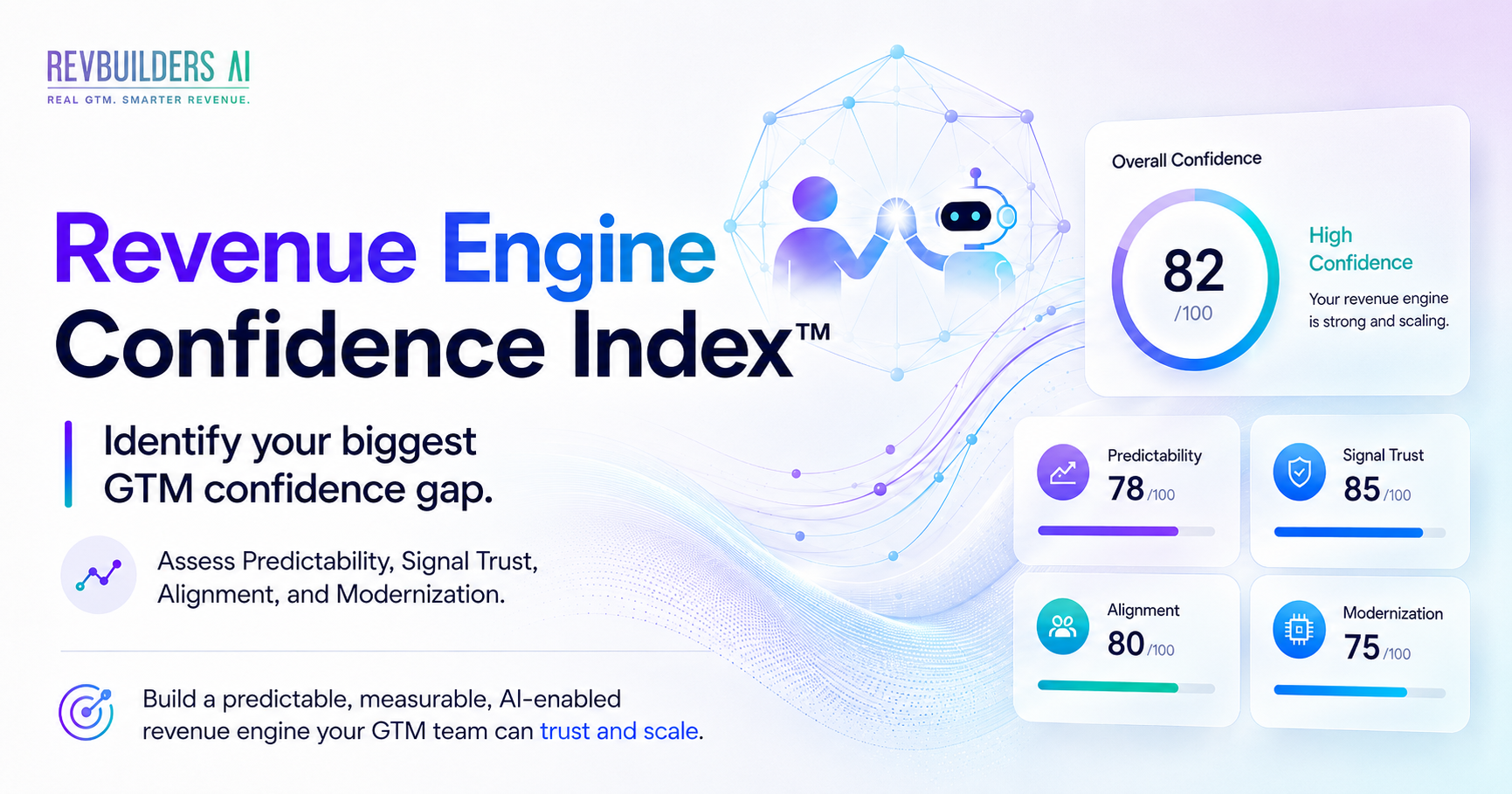
The Revenue Engine Confidence Index™ helps B2B GTM leaders identify where confidence is breaking down across predictability, signal trust, team alignment, and AI readiness—so you can prioritize the right redesign before you scale automation.
Here’s to building a GTM team—and a revenue engine—you can trust and scale,
~ Nikke
RevBuilders AI helps B2B GTM teams build, launch, and scale human-agentic GTM operating models and revenue programs — so people, AI agents, signals, workflows, and metrics work together as one trusted revenue engine.
Real GTM. Smarter Revenue.
Real GTM. Smarter Revenue.
RevAI Real Talk™ is where B2B GTM leaders get clear, practical perspectives on what it actually takes to modernize revenue in the AI era. We break down Revenue AI, Human-Agentic GTM Organizational Design, ABM/ABX, RevOps, outbound, buying groups, data trust, and GTM operating systems to drive scalable, predictable growth — without hype, fluff, or vendor-spin. Subscribe to the feed.
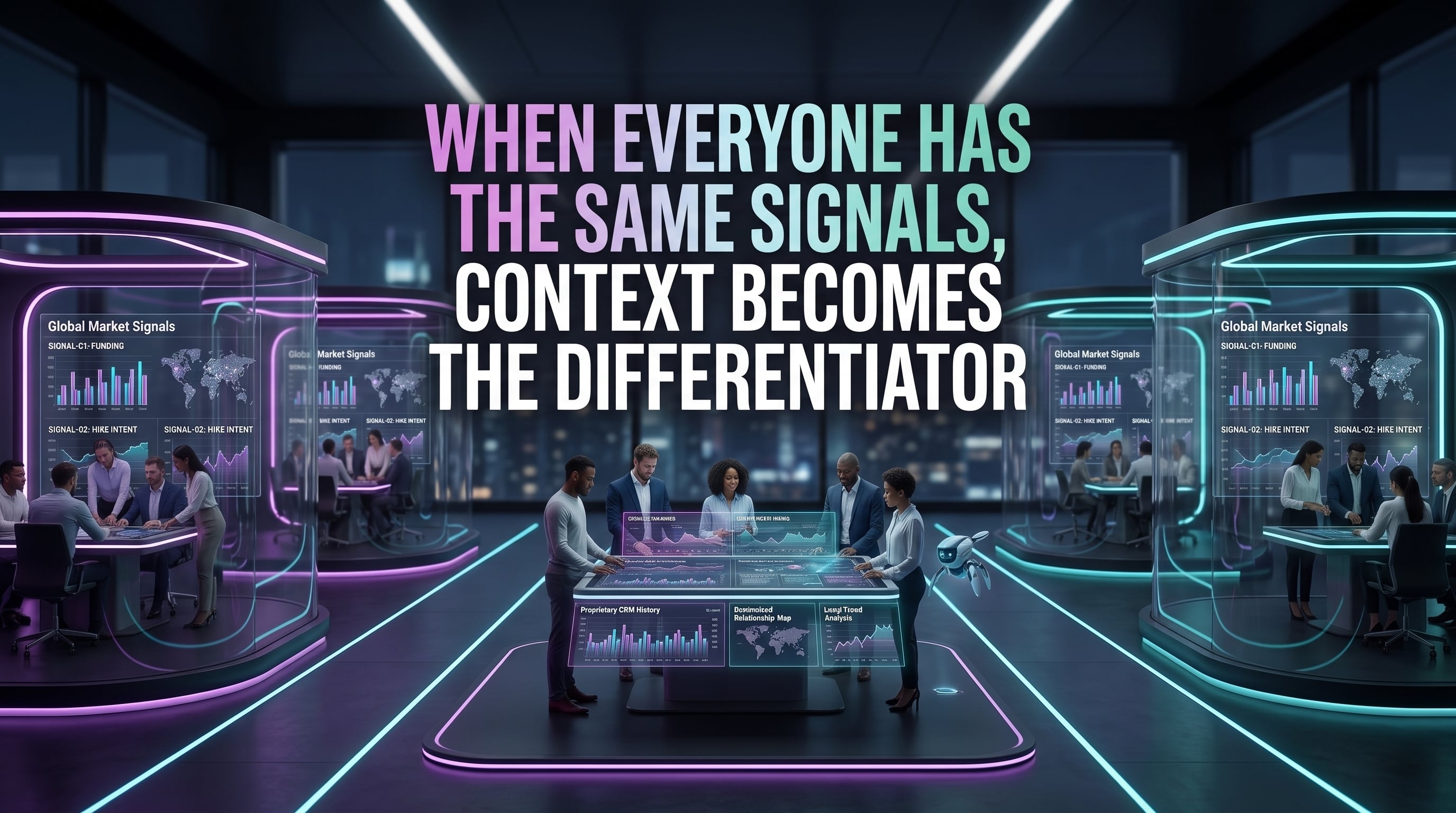 Nikke Rose: 25 Aug 2026
LinkedIn just gave GTM teams a signal of its own.
 Nikke Rose: 04 Aug 2026
Marketing can prove influence and still fail the executive trust test. The fix is not more attribution detail — it is a clearer view of revenue gaps,...
Nikke Rose: 13 Jul 2026
Stop asking which AI is best. Start deciding which teammate should own each part of the work. The next Revenue AI advantage will come from designing...